System size
4.0kW
Not live. Built on Matt's confirmed facts of 12 Aug. Tap anything — nav, cards, town names — it all routes. Photography is Matt's own install shots, not stock. Captions say “location to be confirmed” because we have the photos but not where they were taken.
Solar panels, battery storage and EV charging, designed around your house — how it faces, how it's shaded, and when your household actually uses power. Installed across Staffordshire and the West Midlands by the people who surveyed it.
One home, one energy system
Most people start with panels and add storage later. Both work on their own — they just do more when they're designed as one system from the beginning.
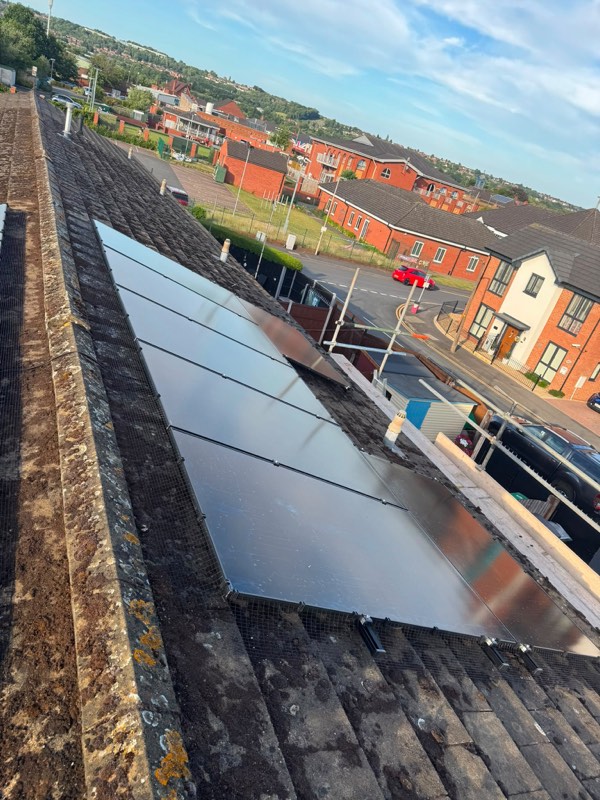
Generate your own electricity during the day and buy less of it from your supplier. Sized to your roof rather than to a package.
How solar works here →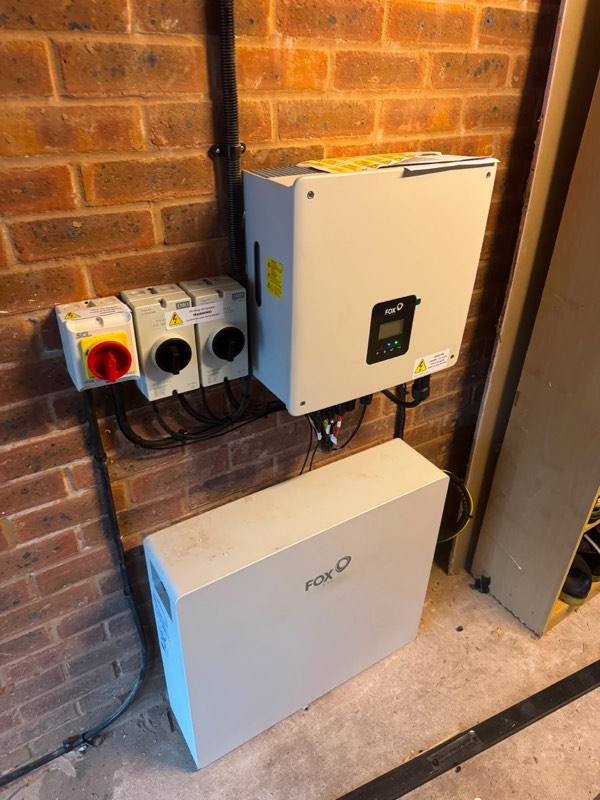
Keep what you generate instead of exporting it cheaply, and use it in the evening when the panels have stopped.
How storage works →Charge the car on your own electricity where we can, and on the cheapest overnight rate where we can't.
How EV charging works →Where the electricity goes
The same five steps every installer describes — worth seeing in order, because where a system loses value is usually step four.
Panels turn daylight into electricity — not heat, and not only in summer.
The house takes what it needs first. That is the cheapest unit you will ever use.
Surplus charges the battery rather than going straight to the grid.
The battery covers the evening peak, when electricity costs the most.
Whatever is genuinely left over is sold back under an export tariff.
Who turns up
There is no call centre and no subcontractor network. The person who surveys your house is the person who installs it and the person who comes back if something needs looking at.
Our work
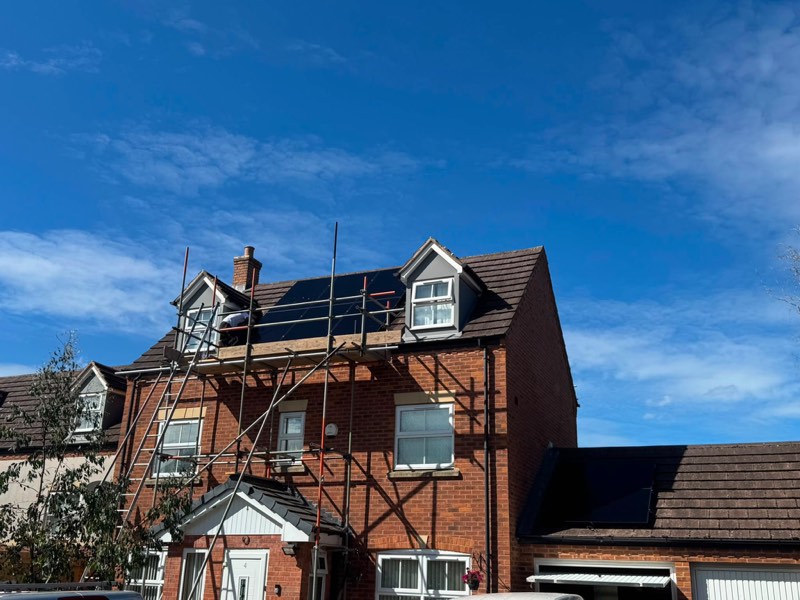
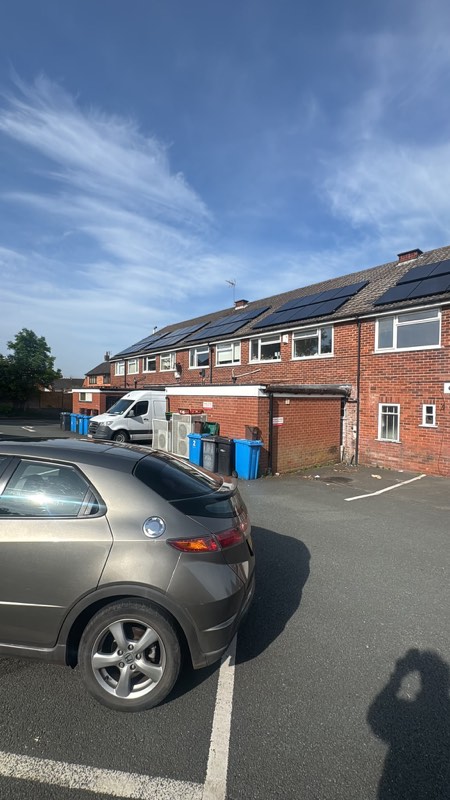
Every photograph on this site is one of our own installations. None of it is stock, and none of it is a render.
Areas we cover
Close enough that a callback is a short drive rather than a scheduling problem.
Paying for it
Both routes get shown at the quote stage, with the payback period for each. You should not have to ask twice to find out what finance costs.
Lowest total cost and the shortest payback. Suits anyone with the cash available who wants the asset owned from day one.
Monthly payments instead of a lump sum, so the system can start offsetting your bill before it is paid off.
Finance terms, representative APR and any credit-broker permissions to be confirmed before this page goes live. Nothing on this page is a quotation.
Advice → Costs & savings
The honest answer is that "how much do solar panels cost" is the wrong first question. Two houses on the same street can need different systems, because what matters is the roof — its pitch, its orientation, and what shades it at four o'clock in the afternoon.
What follows is how the cost is actually built up, so you can read three quotes and tell which one has left something out.
Bigger arrays cost more in total but less per kW, because scaffolding, labour and the inverter don't scale with panel count. This is why a 6 kW system is rarely twice the price of a 3 kW one.
Slate takes longer than concrete tile. A two-storey rear roof with no side access takes more scaffolding than a bungalow. Neither is a problem — both change the day rate.
| Home | System | Panels | Generation | Installed cost |
|---|---|---|---|---|
| Flat / small terrace | 2.5 kW | 6 | 2,250 kWh | Pending |
| 2–3 bedroom | 3.2 kW | 7 | 2,900 kWh | Pending |
| 3–4 bedroom | 4.0 kW | 9 | 3,600 kWh | Pending |
| 5+ bed / new build | 5.5 kW | 13 | 4,950 kWh | Pending |
Swipe the table sideways to see every column →
They generate, but noticeably less than the same panels facing south. On a house with only north-facing roof space we will usually say so at survey rather than sell you a system that will disappoint you.
For most homes in Staffordshire, no — panels fall under permitted development. Listed buildings and conservation areas are the exceptions, and we check before quoting.
A typical domestic install is one to two days on site, plus scaffolding going up before and coming down after.
It depends on when you use electricity. If the house is empty during the day, most of what you generate would otherwise be exported cheaply — that is exactly the case a battery is for.
Areas we cover → Lichfield
We're ten minutes up the road. Solar, battery storage and EV charging for Lichfield homes, surveyed and installed by the same three people every time.
A lot of the housing stock here is 1930s semi and post-war estate — concrete tile, straightforward pitch, good south-facing rear roofs. The conservation area around the cathedral is the one place where we check permitted development before quoting rather than after.